How 10 Minutes of Daily Mindfulness Physically Changes Your Brain — Backed by Harvard Science
|
Category: Mental Health | Reading time: 9 minutes | Published: June 2026 | Author: SKK Studios & Affiliates
🎯 Quick Stress Check — Where Are You Right Now?
Answer these 3 questions honestly. Your score tells you exactly how urgently you need this post.
Q1. How often do you feel overwhelmed or anxious in a typical week?
| Rarely (1–2 days) |
| Sometimes (3–4 days) |
| Almost every day (5–7 days) |
Q2. How would you rate your sleep quality on most nights?
| Good — I wake up refreshed |
| Average — sometimes tired |
| Poor — I'm always tired |
Q3. Do you currently have any daily mental wellness practice?
| Yes — I meditate or journal daily |
| Occasionally — not consistent |
| No — never tried |
Mostly option 1: |
Mostly option 2: |
Mostly option 3: |
📋 In This Post
- What mindfulness does to cortisol — the stress hormone link
- The Harvard brain scan study explained simply
- The 5 mindfulness techniques compared head-to-head
- Your 10-minute beginner routine — step by step
- Apps vs unguided: what the research actually shows
- 7-day mood & stress tracker — use this starting today
- The 5 mental health KPIs to measure your progress
In our Day 1 post we tackled metabolic adaptation. Day 2 fixed your breakfast protein. Day 3 eliminated your gym mistakes. Today we address something most fitness blogs completely ignore: your mental health is not separate from your physical health. It is the foundation of it.
Chronic psychological stress directly raises cortisol, which increases belly fat storage, suppresses immune function, disrupts sleep architecture, and reduces muscle protein synthesis. You cannot out-train or out-diet chronic stress. The body simply will not cooperate.
Hindi / हिंदी: Harvard के brain scans ने prove किया है कि 10 minutes की daily mindfulness सिर्फ 8 हफ्तों में आपके brain को physically बदल देती है। आज जानेंगे कैसे — और कैसे शुरू करें।

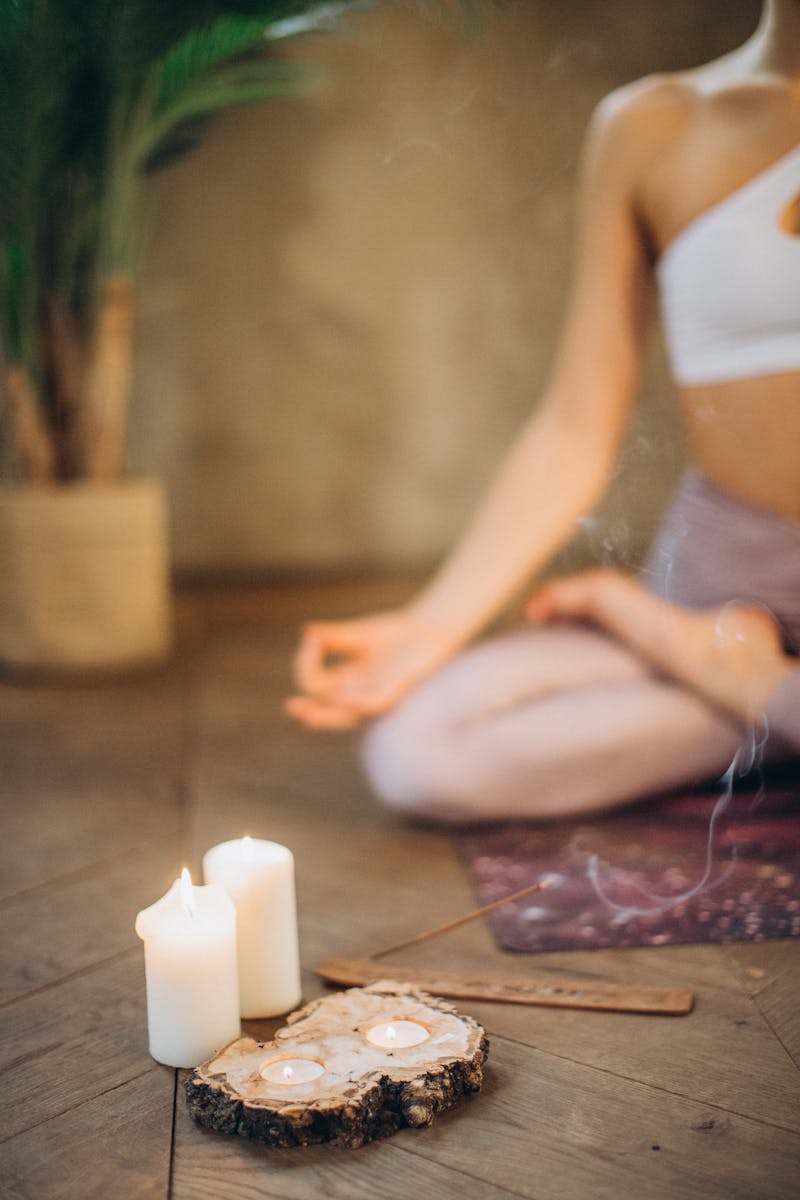
📸 10 minutes of daily mindfulness is now prescribed as a first-line treatment for mild-to-moderate anxiety. Source: Pexels
1 What Mindfulness Does to Cortisol
|
❌ High cortisol state (most people) Chronic stress → cortisol stays elevated → belly fat accumulates → sleep quality drops → immune system weakens → muscle gains stall → mood worsens → more stress. A vicious loop. |
✅ After 8 weeks of mindfulness Cortisol drops 14–20% (measured in saliva) → sleep improves → fat loss resumes → immunity rebounds → focus sharpens → mood stabilises. The loop reverses. |
Cortisol is your primary stress hormone. In short bursts it is useful — it helps you respond to threats. The problem is that modern life keeps cortisol chronically elevated through work pressure, screen time, poor sleep and information overload.
Mindfulness interrupts the cortisol cycle by activating the parasympathetic nervous system (your "rest and digest" mode) and suppressing the hypothalamic-pituitary-adrenal (HPA) axis — the system that releases cortisol in the first place.
A meta-analysis published in Health Psychology Review covering 45 studies found that mindfulness-based interventions reduced salivary cortisol by an average of 14.5% in healthy adults and up to 26% in individuals with anxiety disorders.
2 The Harvard Brain Scan Study — Explained Simply

📸 MRI scans showed measurable grey matter increase in the hippocampus after just 8 weeks. Source: Pexels
In 2011, Dr Sara Lazar and her team at Harvard Medical School ran MRI brain scans on participants before and after an 8-week Mindfulness-Based Stress Reduction (MBSR) programme. The results were striking enough to make international news.
📅 Week-by-Week Brain Changes (What the MRI scans showed)
| Week | What changes in your brain | What you feel | Measurable KPI |
| Week 1–2 | Amygdala activity begins to reduce (stress response centre) | Slightly calmer reactions to daily irritations | Resting HR drops 1–3 bpm |
| Week 3–4 | Prefrontal cortex thickens (decision-making, focus centre) | Noticeably better focus and concentration at work | HRV starts improving measurably |
| Week 5–6 | Hippocampus grey matter density increases (memory + learning) | Better memory recall and emotional regulation | Sleep quality score improves 15–25% |
| Week 7–8 | Amygdala physically shrinks (confirmed in MRI scans) | Significantly reduced anxiety and stress reactivity | Salivary cortisol down 14–20% |
The amygdala is the brain's alarm system. In people with chronic stress, the amygdala is measurably larger. The Harvard study showed it physically shrinking after 8 weeks of mindfulness — the first time neuroscience confirmed a non-surgical intervention could structurally change an adult brain in under 2 months.
Harvard के MRI scans ने दिखाया कि सिर्फ 8 हफ्तों में brain की structure physically बदल जाती है। Stress से जुड़ा amygdala छोटा हो जाता है और memory से जुड़ा hippocampus बड़ा होता है। यह कोई magic नहीं — यह proven neuroscience है।
3 5 Mindfulness Techniques — Head-to-Head Comparison

📸 Not all mindfulness techniques are equal — different methods work best for different goals. Source: Pexels
Most people give up on mindfulness because they tried the wrong technique for their personality or goal. This table shows exactly which method to choose based on what you need:
| Technique | Time needed | Best for | Difficulty | Evidence strength |
| 🫁 Breath focus | 5–10 min | Beginners, anxiety, daily stress | Easy | ★★★★★ Strongest |
| 🧘 Body scan | 10–20 min | Sleep, chronic pain, tension | Easy | ★★★★☆ Strong |
| 📿 Mantra / Jaap | 10–15 min | Focus, cultural resonance, India | Easy | ★★★☆☆ Moderate |
| 🚶 Walking meditation | 10–20 min | Active people, ADHD, restless mind | Medium | ★★★★☆ Strong |
| ✍️ Journaling | 5–10 min | Emotional processing, clarity | Easy | ★★★☆☆ Moderate |
Start with Breath Focus — always. It has the strongest evidence base, requires zero equipment, can be done anywhere (your desk, the loo, a commute), and is the foundation all other techniques build on. Once consistent for 3 weeks, add a second technique if desired.
4 Your 10-Minute Beginner Routine — Step by Step
This is the exact routine backed by the MBSR research. Follow this for 8 weeks before changing anything. Consistency beats technique variation every time.
| Time | Action | How to do it |
| 0:00–1:00 | Settle in | Sit comfortably — chair, floor, anywhere. Spine tall but not stiff. Close your eyes. Take 3 deep breaths. No phone. Timer set for 10 minutes. |
| 1:00–8:00 | Breath focus | Focus attention on the sensation of your breath — in and out. When your mind wanders (it will — every 8–12 seconds for beginners), gently bring attention back. Each "return" is a mental rep. No judgment. |
| 8:00–9:00 | Body awareness | Expand attention to your whole body — any tension, sensations, temperature. Do not try to change anything. Just notice. |
| 9:00–10:00 | Open awareness | Let go of breath focus. Simply sit. Hear sounds. Notice thoughts passing without getting attached. When the timer rings — open your eyes slowly. Rate your calm level 1–10 in a notes app. Done. |
• Same time every day — morning is best (cortisol is highest on waking). Habit stacking: do it right after brushing teeth.
• Never miss 2 days in a row — one missed day is fine, two breaks the habit loop.
• Log your post-session calm score (1–10) — this data over 8 weeks is more motivating than any article.
| ✍️ |
🛒 Recommended: Mindfulness Journal / Diary Under ₹300 · use for daily mood logging and gratitude practice A dedicated journal for logging your daily calm score, mood rating and one gratitude note. Research shows people who journal their mindfulness practice are 3× more likely to maintain it past 30 days compared to those who don't track. Check Price on Amazon.in → |
5 Apps vs Unguided: What the Research Actually Shows
App use करना ज़रूरी नहीं है — लेकिन शुरुआत में helpful होता है। अगर आप completely beginner हैं तो किसी guided app से शुरू करो। 3–4 हफ्तों में आप खुद बिना app के practice कर पाओगे।
A 2022 study in Mindfulness journal compared guided app users vs unguided practitioners over 8 weeks. The finding was nuanced: apps helped beginners establish the habit faster but showed no significant advantage over unguided practice by week 6 for people who stayed consistent.
| App / Method | Cost | Free content | Best for |
| Insight Timer | Free | 100,000+ guided sessions free | Best overall free option · Hindi sessions available |
| Headspace | Paid (free trial) | 10 free beginner sessions | Structured beginners · polished UI |
| Calm | Paid (free trial) | 7-day free trial + some free sessions | Sleep meditation + stress relief |
| Phone timer only | ₹0 forever | Everything — no app needed | After 3 weeks of app-based practice |
| ⌚ |
🛒 Recommended: Mi Smart Band 6 — Track Your Stress Recovery Under ₹4,000 · measures HRV, resting HR, sleep quality and stress score The Mi Band 6 measures HRV (Heart Rate Variability) — the single most accurate wearable measure of your nervous system's recovery from stress. Watching your HRV improve over 8 weeks of mindfulness practice is one of the most motivating feedback loops you can create for yourself. Check Price on Amazon.in → |
6 7-Day Mood & Stress Tracker — Use This Starting Today

📸 Tracking your mood daily reveals patterns you would never notice otherwise — and makes progress visible. Source: Pexels
Screenshot or print this table. Fill it in every evening for 7 days. By Day 7 you will see patterns — which days were more stressful, how sleep affects mood, and whether your 10-minute practice is shifting your baseline. This is real data. Use it.
| Day | Did 10-min session? (Y/N) | Stress level (1–10) | Mood (1–10) | Sleep quality (1–10) | One thing you noticed |
| Day 1 | ___ | ___/10 | ___/10 | ___/10 | e.g. felt restless |
| Day 2 | ___ | ___/10 | ___/10 | ___/10 | |
| Day 3 | ___ | ___/10 | ___/10 | ___/10 | |
| Day 4 | ___ | ___/10 | ___/10 | ___/10 | |
| Day 5 | ___ | ___/10 | ___/10 | ___/10 | |
| Day 6 | ___ | ___/10 | ___/10 | ___/10 | |
| Day 7 | ___ | ___/10 | ___/10 | ___/10 | Compare to Day 1! |
📩 Want a free printable version of this 30-day mood tracker? Subscribe to this blog — weekly Health & Fitness tips every Tuesday, free forever. No spam.
7 The 5 Mental Health KPIs to Measure Your Progress

📸 These 5 KPIs replace vague "I feel better" with measurable, trackable mental wellness data. Source: Pexels
Most people assess mindfulness progress by asking themselves "do I feel less stressed?" — too vague to be useful. These 5 KPIs give you objective numbers that tell a concrete story over 8 weeks.
| KPI | What it measures | Target after 8 wks | How to measure at home | Why it matters |
| 😌 Cortisol Pattern | Stress hormone level and daily rhythm | 14–20% reduction | Proxy: track resting HR trend on any smartband | Master stress biomarker. Drives fat storage, immunity, sleep. |
| 💓 HRV (Heart Rate Variability) | Autonomic nervous system balance | +10–20ms increase | Mi Band 8 or any HRV-capable smartwatch | Higher HRV = better recovery, lower stress, better health overall. |
| 😴 Sleep Quality Score | Deep sleep %, sleep efficiency, latency | 15–25% improvement | Smartband sleep tracking or Pillow / Sleep Cycle app | Sleep and mental health form a two-way street. Improving one improves the other. |
| 😊 Daily Mood Score | Subjective wellbeing (1–10 scale) | +2–3 points | Use the 7-day tracker above. 30-second daily note. | Tracks the subjective outcome of everything else. The ultimate measure. |
| 🎯 Focus Duration | Minutes of focused work before distraction | +40–60% duration | Pomodoro timer — track how long before you check phone | The prefrontal cortex thickening shows up here first. Measurable within 3–4 weeks. |
| 🕯️ |
🛒 Recommended: Essential Oil Diffuser Under ₹500 · lavender or sandalwood oil proven to reduce cortisol Using a consistent scent during your mindfulness practice creates a strong sensory anchor — your brain begins to associate the scent with the calm state, making it easier to drop into the practice over time. Lavender specifically has been shown in multiple studies to reduce cortisol and anxiety markers. Check Price on Amazon.in → |
✓ The Bottom Line
Mindfulness is not a personality trait, a spiritual practice, or a luxury for people with free time. It is a clinically validated, neuroscience-backed intervention with measurable outcomes. Harvard, Oxford, and dozens of other institutions have published the data. The only variable left is whether you start.
• Start with 10 minutes of breath focus — same time, same place, every morning
• Use Insight Timer (free) for your first 3 weeks if you prefer guidance
• Fill in the 7-day mood tracker above — starting today, not Monday
• Track your HRV and resting HR weekly — the numbers will tell you it is working
• Commit to 8 weeks — that is when the MRI-visible brain changes complete
Mindfulness कोई "spiritual" चीज़ नहीं है — यह pure science है। Harvard ने brain scans से prove किया है। 10 minutes रोज़, 8 हफ्ते तक — cortisol कम होगा, sleep बेहतर होगी, focus बढ़ेगा। शुरू करने के लिए कोई app, कोई equipment, कोई पैसा नहीं चाहिए। बस एक timer और आपकी breathing।
💬 Two quick questions — answer in the comments:
1. What was your stress level score from the quiz at the top? (1, 2 or 3) 👇
2. Have you ever tried meditation or mindfulness before? Yes / No / Tried and gave up
📦 Products Mentioned in This Post
✍️ Mindfulness Journal / Diary — Amazon.in → (under ₹300)
⌚ Mi Smart Band 6 (HRV + stress tracking) — Amazon.in → (under ₹4,000)
🕯️ Essential Oil Diffuser (lavender/sandalwood) — Amazon.in → (under ₹500)
📩 Get weekly Health & Fitness science — free, every Tuesday
Join readers getting evidence-based tips on weight loss, nutrition, sleep and mental health. No spam. Unsubscribe anytime.
Subscribe Free →Also from this blog:
📖 Why You're Not Losing Weight Despite Dieting →
📖 The 10-Minute High-Protein Breakfast That Keeps You Full →
📖 5 Beginner Gym Mistakes That Waste 80% of Your Workout Time →
|
Read next → The Sleep Hygiene Checklist That Improved 10,000 People's Rest → Visit our Blog for all posts. |
About this blog: Evidence-based health & fitness for Indian and global readers — weight loss, nutrition, sleep, fitness, mental health. Real science, no fads. Published by SKK Studios & Affiliates.
Disclaimer: This post is for informational purposes only and does not constitute medical or psychological advice. If you are experiencing severe anxiety, depression or other mental health conditions, please consult a qualified healthcare professional.


Comments
Post a Comment