How Much Protein Do You Really Need? The Science Behind the Number
|
Category: Nutrition | Reading time: 9 minutes | Published: June 2026 | Author: SKK Studios & Affiliates
🥩 Are You Getting Enough Protein?
3 quick questions to find out.
Q1. What is your primary goal?
| Build muscle and strength |
| Lose fat while keeping muscle |
| General health and staying active |
Q2. How would you describe your current diet?
| I eat meat, eggs and dairy regularly |
| Vegetarian — dal, paneer, curd, eggs |
| Vegan or mostly plant-based |
Q3. How often do you track what you eat?
| I track every meal carefully |
| I track loosely / sometimes |
| I never track — I just eat |
Goal — Muscle: You need 1.8–2.2g per kg. Most people eating normally get half this. |
Goal — Fat loss: 1.6–2g per kg protects muscle while in deficit. Protein is your best friend here. |
Goal — Health: 1.2–1.6g per kg is your target. Achievable from whole foods alone. |
📋 In This Post
- What protein actually does in your body
- How much protein you need — by goal
- Complete Indian food protein guide — 20+ sources
- 5 protein myths busted by science
- How to hit your target every day — practical system
- The 5 protein KPIs to track
Day 9 of our series. We covered weight loss, breakfast, gym mistakes, mindfulness, sleep, sedentary behaviour, intermittent fasting and home workouts. Today the single most misunderstood topic in nutrition: protein.
A 2016 meta-analysis in the British Journal of Sports Medicine analysing 49 studies found the optimal protein intake for muscle growth is 1.62g per kg of bodyweight per day — with no additional benefit beyond 2.2g/kg. The average Indian adult eats 0.6–0.8g/kg. That gap explains why most people struggle to build muscle despite training hard.
Hindi / हिंदी: Protein सिर्फ bodybuilders के लिए नहीं है। यह हर उस इंसान के लिए ज़रूरी है जो muscle रखना, fat lose करना या simply healthy रहना चाहता है। आज जानेंगे exact amount और Indian sources।

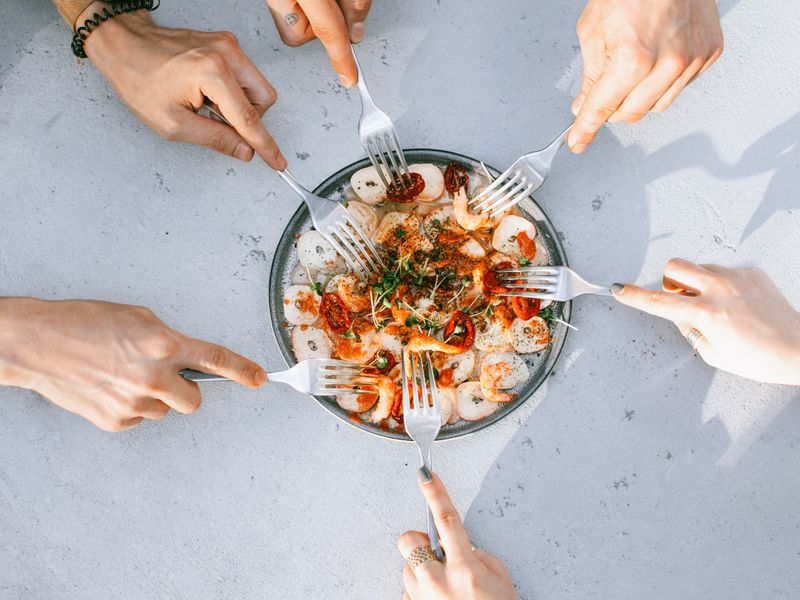
📸 Protein is the building block of every cell in your body — not just muscle. Source: Pexels
🔬 1 What Protein Actually Does in Your Body
Protein is made of amino acids — the raw material your body uses to build and repair virtually everything. Understanding what it does helps you understand why the amount matters so much.
| Function | What it means for you | What happens if too little |
| Muscle repair | Rebuilds muscle fibres damaged during exercise | Muscles shrink instead of grow — even with training |
| Enzymes | Powers digestion, metabolism and immune response | Slow metabolism, poor immunity, digestive issues |
| Hormones | Builds insulin, glucagon, thyroid hormones | Hormonal imbalances — affects energy, mood, fertility |
| Satiety | Most filling macronutrient — reduces hunger hormones | Constant hunger → overeating → weight gain |
| Thermic effect | Burns 20–30% of protein calories during digestion | Lower daily calorie burn — harder fat loss |
📊 2 How Much Protein You Need — By Goal
The answer depends on your goal, bodyweight and activity level. Use this table to find your daily target — then multiply by your weight in kg.
| Goal | Daily target | Example (70kg person) | Science source |
| Muscle building | 1.8–2.2g/kg | 126–154g per day | BJSM meta-analysis 2016 |
| Fat loss | 1.6–2.4g/kg | 112–168g per day | Higher during deficit to preserve muscle |
| General health | 1.2–1.6g/kg | 84–112g per day | WHO + ICMR guidelines |
| Sedentary adult | 0.8g/kg | 56g per day (bare minimum) | RDA — minimum to prevent deficiency only |
Your weight in kg × 1.8 = your daily protein target in grams. Example: 65kg × 1.8 = 117g protein per day. That is roughly 4 eggs (24g) + 200g chicken (46g) + 1 cup dal (18g) + 200g paneer (28g) + 1 protein shake (24g) = 140g. Achievable in a normal Indian diet with some planning.
🇮🇳 3 Complete Indian Food Protein Guide — 20+ Sources

📸 India has outstanding protein sources — both vegetarian and non-vegetarian. Source: Pexels
India में protein की कमी बहुत common है — especially vegetarians में। लेकिन Indian diet में excellent sources हैं — अंडे, दाल, पनीर, curd, soya, chicken। आज जानेंगे exact protein content हर source का।
| 🥚 Animal Sources (Non-Vegetarian + Eggs) | |||
| Food (100g) | Protein (g) | Calories | Best use |
| Chicken breast (cooked) | 31g | 165 kcal | Best lean protein source — highest protein per calorie |
| Whole egg (1 large) | 6g | 78 kcal | Most complete amino acid profile of any food |
| Egg whites (100g) | 11g | 52 kcal | High protein, zero fat — ideal for cutting phases |
| Tuna / Fish (100g) | 25–28g | 130–150 kcal | Omega-3 + protein — excellent for recovery |
| 🌱 Vegetarian Sources (Indian Staples) | |||
| Paneer (100g) | 18g | 265 kcal | Best vegetarian protein — widely available in India |
| Greek yogurt / Hung curd (100g) | 10g | 97 kcal | Gut health + protein — have as snack or breakfast |
| Moong dal cooked (1 cup) | 14g | 212 kcal | Highest protein dal — easy to digest, high leucine |
| Chana dal (1 cup cooked) | 15g | 268 kcal | High protein + fibre — excellent for fat loss |
| Soya chunks (100g dry) | 52g | 345 kcal | Highest plant protein — complete amino acid profile |
| Rajma / Kidney beans (1 cup) | 15g | 225 kcal | Combine with rice for complete protein — classic Indian meal |
| Milk (250ml) | 8g | 150 kcal | Contains casein — slow-digesting, great before bed |
| Peanut butter (2 tbsp) | 8g | 190 kcal | Calorie-dense — use in moderation during fat loss |
| 🥛 |
🛒 Recommended: MuscleBlaze Whey Protein 24g protein per scoop · mixes easily · affordable in India When whole food sources fall short, whey protein bridges the gap efficiently. 1 scoop = 24g protein in under 2 minutes. MuscleBlaze is the most popular and value-for-money whey protein brand in India — widely trusted and lab-tested. Check Price on Amazon.in → |
|
❌ MYTH 1 "You can only absorb 30g of protein per meal." |
✅ FACT Your body absorbs all protein you eat — it just slows digestion for larger amounts. Meal frequency matters far less than total daily intake. |
|
❌ MYTH 2 "High protein damages your kidneys." |
✅ FACT No evidence for this in healthy people. High protein only poses risk in people who already have diagnosed kidney disease. For healthy adults — completely safe at 2g+/kg. |
|
❌ MYTH 3 "Vegetarians can't get enough protein." |
✅ FACT Soya chunks (52g/100g), paneer (18g/100g), moong dal (14g/cup), curd — vegetarians absolutely can hit targets. It requires planning, not suffering. |
|
❌ MYTH 4 "Protein shakes are steroids / harmful." |
✅ FACT Whey protein is simply a dairy by-product — the same protein in milk, concentrated. It contains no hormones or steroids. It is food, not a drug. |
|
❌ MYTH 5 "More protein always means more muscle." |
✅ FACT Beyond 2.2g/kg, additional protein provides no extra muscle growth benefit. Excess protein is simply stored as fat or excreted. Hit your target — do not exceed it significantly. |
| ⚖️ |
🛒 Recommended: Digital Kitchen Food Scale Under ₹500 · measures to 1g accuracy · essential for protein tracking You cannot hit a protein target you cannot measure. Studies show people underestimate food portions by 30–50% without weighing. A food scale removes all guesswork — weigh your chicken, dal and paneer once and you will know exactly where you stand. Check Price on Amazon.in → |
🗓️ 5 How to Hit Your Target Every Day — Practical System

📸 Hitting your protein target is a planning problem — not a willpower problem. Source: Pexels
Most people fail to hit their protein target not because Indian food lacks protein — but because they have no system. Here is a simple daily framework that works for both vegetarians and non-vegetarians:
| Meal | Vegetarian option | Non-vegetarian option | Protein |
| Breakfast | 4 egg whites + 1 whole egg + curd (100g) | 3 whole eggs + 50g paneer | 28–32g |
| Lunch | 1 cup moong dal + 100g soya chunks + roti | 150g chicken breast + dal + roti | 40–50g |
| Snack | 1 scoop whey + 100g hung curd | 1 scoop whey + 2 boiled eggs | 30–36g |
| Dinner | 100g paneer + rajma (1 cup) + roti | 150g fish/tuna + sabzi + rice | 35–45g |
| Total | 133–163g (vegetarian) | 133–163g (non-vegetarian) | ✅ On target |
| 🧃 |
🛒 Recommended: Protein Shaker Bottle Under ₹300 · leak-proof · BlenderBall wire whisk for lump-free shakes A good shaker bottle makes your daily protein shake quick, mess-free and actually enjoyable. The BlenderBall wire whisk design mixes protein powder completely with no lumps — far better than stirring with a spoon. Essential if you are using whey protein. Check Price on Amazon.in → |
📊 6 The 5 Protein KPIs to Track

📸 Track these 5 numbers weekly and your nutrition improves automatically. Source: Pexels
| KPI | What it measures | Target | How to track | Why it matters |
| 🥩 Daily Protein (g) | Total grams consumed per day | Your BW × 1.8 | Healthifyme app (free) or food scale + labels | The master number — everything else follows from this |
| 💪 Morning Weight | Weekly bodyweight trend | Stable or down | Weigh every morning before eating | Dropping weight + maintaining strength = enough protein |
| 📏 Waist Measurement | Belly fat change over time | Decreasing | Tape measure every 2 weeks | High protein + deficit = fat loss with muscle retention |
| 💪 Push-up Max | Strength maintained or improving | Stable or up | Test weekly — from Day 8 plan | Strength dropping = not enough protein while in deficit |
| 😴 Recovery Score | How sore/recovered after workouts | Improving weekly | Rate 1–10 after each workout | Poor recovery = protein or sleep deficit — check both |
✓The Bottom Line
Protein is the one nutrient that the research consistently shows most people are under-eating. Getting it right does not require supplements — it requires knowing your target and planning your meals around it. The Indian food guide above gives you everything you need from whole foods alone.
• Calculate your target: bodyweight (kg) × 1.8 = daily protein grams
• Distribute across 3–4 meals — 30–40g per meal is the sweet spot
• Weigh your food for 2 weeks — then your eye will be calibrated forever
• Soya chunks are the secret weapon for vegetarians — 52g per 100g, cheapest protein in India
आज से एक काम करो — अपना weight kg में लिखो और उसे 1.8 से multiply करो। यही आपका daily protein target है। इसे 3-4 meals में divide करो। Dal, paneer, eggs, chicken और curd को priority दो। 2 हफ्ते में difference खुद नज़र आएगा।
💬 Quick question:
What is your bodyweight in kg × 1.8? That is your daily protein target. Do you think you are currently hitting it? Type Yes / No / Not sure in the comments 👇
📦 Products Mentioned in This Post
🥛 MuscleBlaze Whey Protein — Amazon.in →
⚖️ Digital Kitchen Food Scale — Amazon.in → (under ₹500)
🧃 Protein Shaker Bottle — Amazon.in → (under ₹300)
📩 Get Weekly Health & Fitness Science — Free Every Tuesday
Evidence-based tips on nutrition, protein, fitness and sleep. No spam. Unsubscribe anytime.
Subscribe Free →Also from this blog:
📖 The 10-Minute High-Protein Breakfast →
📖 Home Workout Plan That Builds Real Muscle →
|
Read next → Creatine: What the Science Actually Says (No Gym Bro Myths) → Visit our Blog for all posts |
About this blog: Evidence-based health & fitness for Indian and global readers. Real science, no fads. Published by SKK Studios & Affiliates.
Disclaimer: For informational purposes only. Not medical advice. Consult a healthcare professional before making significant dietary changes.
Popular posts from this blog
The 10-Minute High-Protein Breakfast that keeps you full until Lunch

Why You're Not Losing Weight Despite Dieting — And What Science Actually Says.

Is Your Child Suffering from ADHD or Dyslexia? Time to Know & Understand

Comments
Post a Comment